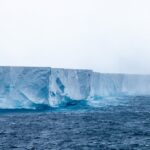
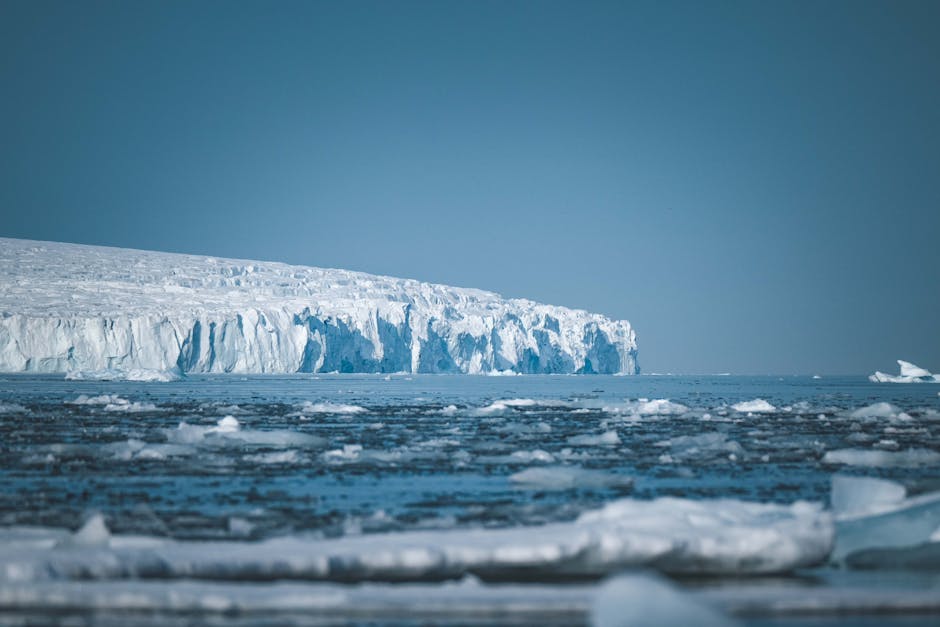
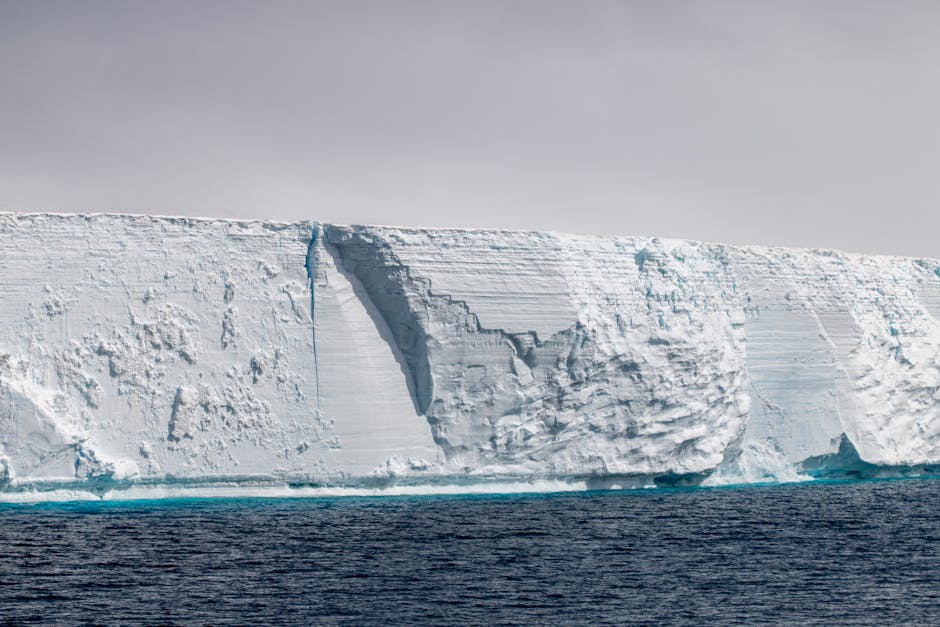
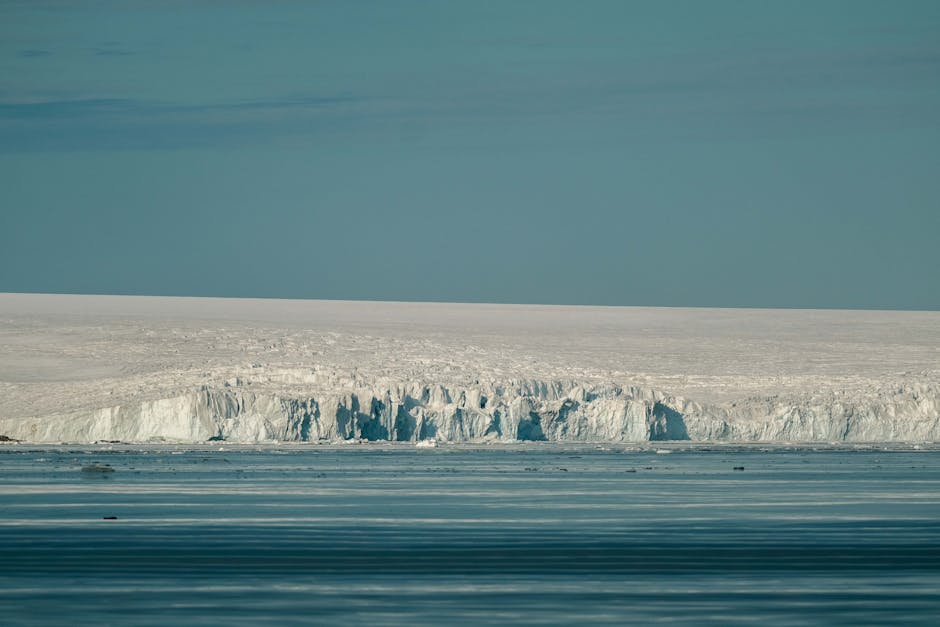
The Thwaites Glacier ice shelf—dubbed the “Doomsday Glacier” by scientists—collapsed into the Amundsen Sea on March 15, 2026, sending shockwaves through global climate monitoring systems. Within 72 hours, satellite data confirmed that an ice mass roughly the size of Florida had broken away, accelerating sea level rise projections by decades.
UN Secretary-General António Guterres immediately convened an emergency Global Climate Summit in Geneva for April 2-4, marking the first time in the organization’s history that a natural disaster has triggered such an urgent international response. The collapse represents a tipping point that climate scientists have warned about for over a decade, but few expected it to happen this rapidly.
## Immediate Global Consequences Unfold
Sea Level Projections Accelerate
The Thwaites collapse has fundamentally altered sea level rise calculations. Dr. Catherine Walker from NASA’s Jet Propulsion Laboratory announced that global sea levels could rise by 2.1 feet by 2050—nearly double previous estimates of 1.2 feet. This acceleration stems from Thwaites acting as a natural dam for the West Antarctic Ice Sheet, which contains enough ice to raise sea levels by 10 feet.
Coastal cities are already implementing emergency adaptation measures. Miami-Dade County activated its $6 billion flood barrier system two weeks early, while the Netherlands increased its Delta Works budget by €15 billion to accelerate completion of the Afsluitdijk reinforcement project by 2028.
Economic Markets React Swiftly
Financial markets responded immediately to the collapse. Coastal real estate investment trusts (REITs) dropped 23% in the first week, while renewable energy stocks surged. Tesla’s stock price jumped 18% as governments worldwide accelerated electric vehicle mandates. The Global Climate Risk Index, launched by Swiss Re in 2025, recorded its largest single-day spike since inception.
Insurance giant Munich Re announced it would no longer issue new policies for properties within 5 feet of current sea level, effective immediately. This decision affects approximately 4.2 million properties across 15 countries, creating an estimated $847 billion gap in coverage.
## Emergency Summit Agenda Takes Shape
Binding Commitments on the Table
The Geneva summit will address three critical areas: immediate adaptation funding, accelerated emissions reductions, and emergency migration protocols. Unlike the voluntary commitments of previous climate summits, this emergency session will focus on legally binding agreements with enforcement mechanisms.
The European Union has already pledged €200 billion over five years for a Global Adaptation Emergency Fund, while the United States Congress fast-tracked a $150 billion coastal protection package through emergency legislative procedures. China announced it would advance its carbon neutrality target from 2060 to 2040, contingent on similar commitments from other major emitters.
Migration Framework Development
The summit will establish the world’s first comprehensive climate migration framework. Initial proposals include creating “Climate Haven” visa categories for countries accepting displaced populations, and establishing a $50 billion International Climate Migration Fund managed by the International Organization for Migration.
Small island nations have formed the Alliance of Climate-Threatened States, demanding immediate relocation assistance and sovereignty preservation mechanisms. Tuvalu Prime Minister Feleti Teo stated that his nation’s 12,000 residents need relocation options within 18 months, not the previously projected 2035 timeline.
## Technology and Innovation Responses Accelerate
Geoengineering Projects Fast-Tracked
The Thwaites collapse has pushed previously theoretical geoengineering solutions into active development. The Arctic Ice Project, which uses hollow glass microspheres to increase ice reflectivity, received $2.8 billion in emergency funding from a consortium of tech billionaires including Bill Gates and Jeff Bezos.
Microsoft announced it would deploy its direct air capture technology across 15 new facilities by 2027, while Google committed to powering these facilities entirely through its renewable energy infrastructure. These projects represent the largest private investment in climate intervention technology to date.
Smart City Adaptations Scale Rapidly
Cities are implementing AI-driven flood prediction systems at unprecedented speed. Singapore’s Smart Nation initiative expanded its flood sensor network from 400 to 2,000 units within two weeks of the collapse. The sensors use machine learning algorithms to predict flooding 6 hours in advance, providing critical evacuation time.
Rotterdam unveiled its completed floating neighborhoods project ahead of schedule, demonstrating how 50,000 residents can live on water-adapted infrastructure. The Dutch model is now being replicated in 12 cities globally, with construction beginning in Jakarta, Bangkok, and New Orleans by late 2026.
## Corporate Sector Transformation Intensifies
Major corporations are abandoning incremental sustainability approaches for radical business model changes. Unilever announced it would achieve net-negative carbon emissions by 2028—two years ahead of schedule—by investing $8 billion in regenerative agriculture and carbon capture technologies.
The shipping industry, responsible for 3% of global emissions, committed to 100% green fuel adoption by 2030. Maersk, the world’s largest shipping company, ordered 25 additional methanol-powered vessels, while port authorities in Los Angeles and Rotterdam began constructing green hydrogen refueling infrastructure.
Financial institutions are restructuring climate risk assessments. JPMorgan Chase updated its lending criteria to exclude all fossil fuel expansion projects and increased green finance commitments from $200 billion to $400 billion through 2030. Bank of America followed with a $300 billion increase in sustainable finance targets.
## The Path Forward
The Thwaites collapse has eliminated the luxury of gradual climate action. The Geneva summit represents humanity’s most critical diplomatic moment since the Cuban Missile Crisis, with the added complexity that the threat cannot be negotiated away—only managed through unprecedented global cooperation.
Success will be measured not in voluntary pledges but in binding commitments with enforcement mechanisms. The world needs $4.8 trillion in annual climate investment by 2030, according to the International Energy Agency’s emergency assessment released March 30. This figure represents roughly 5% of global GDP—substantial but achievable if nations treat this as the wartime mobilization it requires.
The summit’s outcomes will determine whether the Thwaites collapse becomes a catalyst for the rapid transformation needed to prevent complete Antarctic ice sheet destabilization, or merely the first domino in an irreversible cascade of climate tipping points.