AeroFarms just secured $200 million in Series D funding, bringing their total valuation to $1.2 billion. Bowery Farming landed contracts with Whole Foods and Walmart worth $500 million combined. These aren’t niche agricultural experiments anymore—vertical farming has become a billion-dollar industry reshaping how we grow and buy food.
The numbers tell a compelling story. The global vertical farming market hit $5.6 billion in 2023 and analysts project it will reach $24.8 billion by 2030. What started as hydroponic hobbyist projects in converted warehouses has evolved into sophisticated operations that can produce 365 times more food per square foot than traditional farming, using 95% less water and zero pesticides.
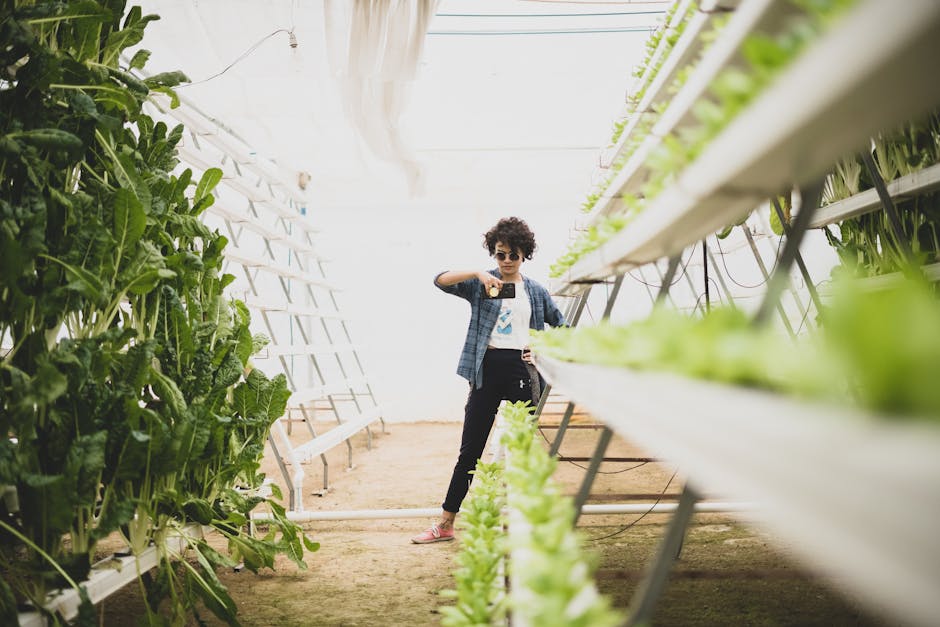
Market Leaders Capturing Grocery Shelf Space
AeroFarms: The Tesla of Leafy Greens
AeroFarms operates 12 vertical farms across the United States, with their flagship Newark facility producing 2 million pounds of leafy greens annually in a space smaller than two football fields. Their proprietary LED lighting system and aeroponic growing method—where plants grow in air with nutrients delivered directly to roots—cuts growing cycles from 30-45 days to just 12-16 days.
The company’s products now appear in over 2,000 retail locations including ShopRite, Fresh Market, and Amazon Fresh. Their baby spinach sells for $4.99 per 5-ounce container, commanding a 40% premium over conventional options. Despite the higher price, AeroFarms reports 89% customer retention rates, driven by consistent quality and extended shelf life that lasts 2-3 weeks versus 5-7 days for field-grown produce.
Bowery Farming’s Distribution Dominance
Bowery Farming has taken a different approach, focusing on automation and data analytics. Their farms use machine learning algorithms to monitor over 100,000 data points per growing cycle, optimizing everything from nutrient timing to LED spectrum adjustments. This technology-first strategy has attracted major retail partnerships.
Their recent Walmart deal puts Bowery’s packaged salads, herbs, and microgreens in 650 stores across 11 states. The products retail for $3.49-$6.99, positioned as premium local produce available year-round. Walmart executives cite Bowery’s ability to guarantee consistent supply and eliminate weather-related shortages as key factors in the partnership.
Plenty’s Strawberry Breakthrough
While most vertical farms focus on leafy greens, Plenty made headlines in late 2023 by successfully growing strawberries indoors at commercial scale. Their Driscoll’s partnership produces strawberries that retail for $5.99 per pound—competitive with premium organic strawberries—but available fresh year-round regardless of season.
Plenty’s Richmond, Virginia facility can produce strawberries equivalent to 720 acres of outdoor farming in just 4 acres of indoor space. The controlled environment eliminates the need for fungicides and reduces water usage by 97% compared to traditional strawberry farming.
Technology Driving Competitive Advantages
LED Innovation Slashing Energy Costs
Energy costs historically represented 60-70% of vertical farming operational expenses, making profitability challenging. However, next-generation LED systems developed by companies like Fluence and Signify have cut energy consumption by 40% since 2021.
These new LEDs can adjust spectrum and intensity throughout growing cycles, mimicking seasonal changes to trigger specific plant responses. For example, increasing red spectrum in final growth stages boosts anthocyanin production in lettuce, creating more vibrant colors that command premium prices.
AeroFarms’ latest facility in Danville, Virginia uses dynamic LED arrays that consume just 38 watts per square foot compared to 65 watts in their first-generation farms. This efficiency gain translates to $2.3 million in annual energy savings for a 100,000 square foot facility.
Automation Reducing Labor Dependencies
Labor typically accounts for 30-35% of vertical farming costs. Leading companies are deploying robotic systems to handle seeding, harvesting, and packaging operations. Iron Ox uses autonomous robots that can harvest 1,000 heads of lettuce per hour with 99.2% accuracy.
Bowery’s newest farms employ robotic harvesters that work 24/7, reducing labor costs by 60% while improving harvest timing precision. These systems can detect optimal harvest moments for individual plants, maximizing yield quality and extending shelf life.
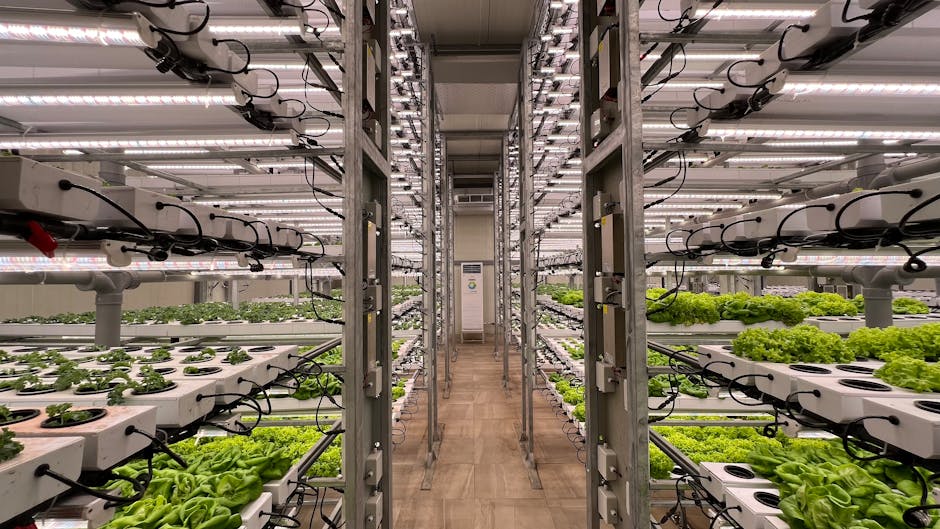
Supply Chain Advantages Creating Market Disruption
Hyperlocal Production Reducing Transportation Costs
Vertical farms located within 50 miles of major metropolitan areas eliminate the 1,500-mile average distance that produce travels from farm to table. This proximity advantage reduces transportation costs by 70-80% and enables harvest-to-shelf times of 24 hours versus 7-10 days for traditional produce.
AppHarvest’s facilities in Kentucky serve major East Coast markets within one day’s truck drive, while maintaining growing conditions that produce tomatoes year-round. Their tomatoes reach grocery stores within 48 hours of harvest, extending shelf life by 5-7 days compared to greenhouse tomatoes shipped from Mexico or Canada.
Weather-Independent Reliability
The February 2021 Texas freeze that damaged traditional farms caused lettuce prices to spike 300%. Vertical farms maintained steady production and pricing, demonstrating their value as supply chain stabilizers. Grocery buyers increasingly view indoor farming partnerships as insurance against weather volatility and supply disruptions.
Kroger now sources 15% of their leafy greens from vertical farming partners during winter months, ensuring consistent inventory when outdoor growing conditions deteriorate. This strategy prevented the stock-outs that plagued competitors during the 2023 West Coast atmospheric river events that damaged California lettuce crops.
Investment Capital Fueling Rapid Expansion
Venture capital and private equity firms invested $1.9 billion in vertical farming companies in 2023, with average deal sizes increasing 65% year-over-year. Major institutional investors like SoftBank, Google Ventures, and BlackRock have taken positions in leading companies.
This capital influx is funding facility expansions that will triple industry production capacity by 2026. AeroFarms plans to open 8 new facilities, Bowery is building 12 farms across the Southeast, and Plenty is constructing their first international operations in the Middle East and Asia.
Clear Market Leaders Emerging
Vertical farming has moved beyond the experimental phase into legitimate competition with traditional agriculture. Companies with strong technology platforms, established retail relationships, and sufficient capital are capturing significant market share in premium produce categories.
The industry will likely consolidate around 5-7 major players by 2028, with smaller operations either acquired or pushed out by economies of scale. For investors and food retailers, the question isn’t whether vertical farming will succeed—it’s which companies will dominate the $25 billion market emerging over the next six years.